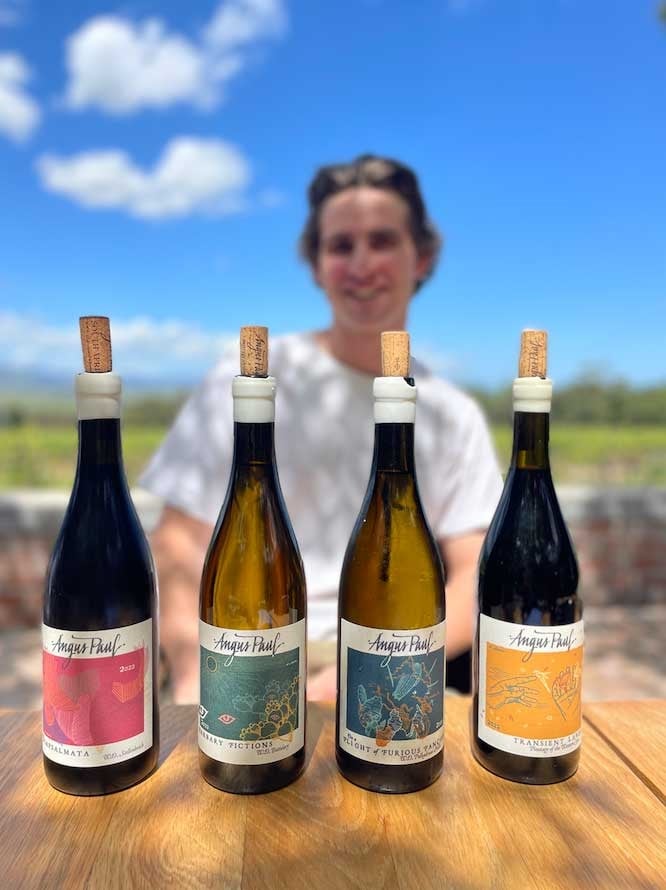
Diapsalmata Cinsault
Learn More About This Wine
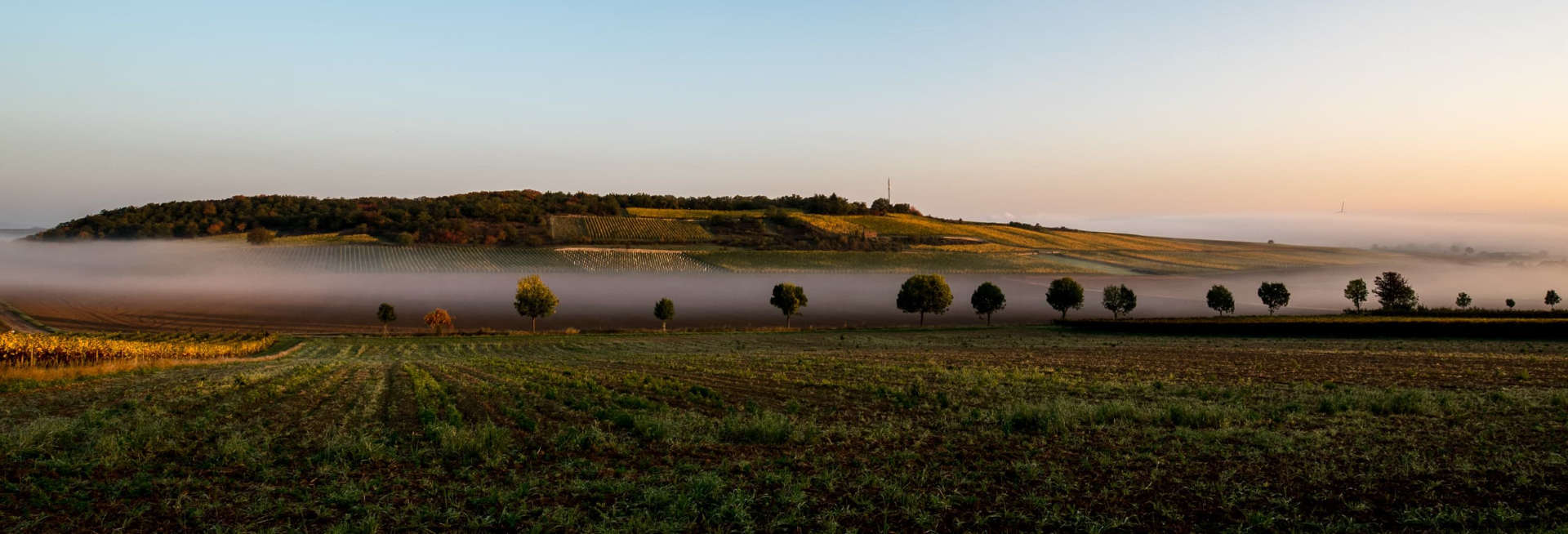
One sight: Firgrove; one grape: Cinsault. A vineyard that fell out of the sky. Planted in 1966 along one of the least picturesque (present day) but unsung terroirs of the Cape, whose greater area is known as Macassar. These old vines dig deep into the coarse red granite soils, the sea a couple kilometers away and the Helderberg looms behind them. For a good bottle, Cinsault really demands a good site, and this one has it all.
Grapes are hand picked and cooled overnight. The following morning they are put into bins for maceration as complete whole bunches and are thoroughly trodden. No sulphur, yeast, acid, enzymes or water were added.
Natural fermentation took place over 10 days after which a maceration was carried out until the tannins had developed satisfactorily (about 5 more days). After draining, the remaining grapes were pressed to large old wooden barrels. A spontaneous malolactic fermentation then took place, and in early Autumn wines were sulphured for the first time. Wines were bottled in December after having spent 12 months in barrels with no racking.
White pepper is the foremast of the aromatics, pervading and pungent. On its heels come the charming signatures of Cinsault: strawberries and crushed raspberries. The tannins are fine but firm structure around an ethereal flavour core, and the granitic soils and maritime climate show their influence in the constant, natural brightness.
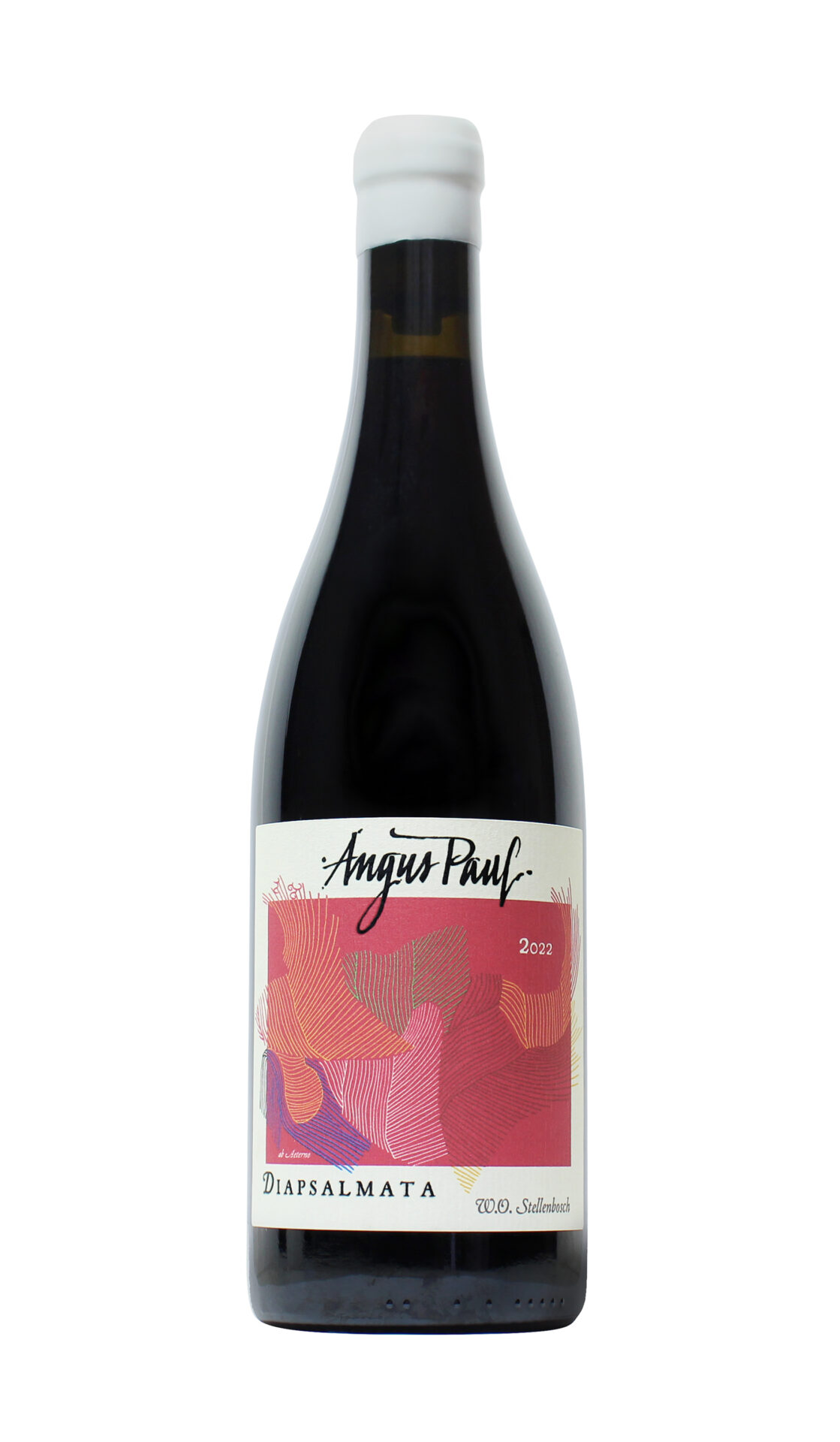
Diapsalmata loosely translates as a ‘refrain’, which benefits the introduction of Cinsault into the range. This ethereal grape, often bemoaned, is a song of the turbulent South African past, and when grown in the right spot, is a fragile voice of the Chorus between the louder titans of the grape landscape.
Diapsalmata is easier to drink and enjoy than it is to pronounce, but that’s better than the other way around. Made with grapes from Firgrove, in sight of False Bay, it’s intensely spicy and aromatic, with deftly handled 100% whole bunch-fermentation, stony minerality, flavours of charcuterie and red berries and tobacco leaf tannins. Tim Atkin MW – South Africa Report 2025 – 93 points